Businesses use printed books for much more than traditional publishing. A professionally printed book can become a valuable business tool for presenting company information, documenting achievements, educating employees, communicating with clients, or showcasing products and services.
From company profile books and annual reports to training manuals and corporate presentation books, the quality of the finished publication can influence how a business is perceived.
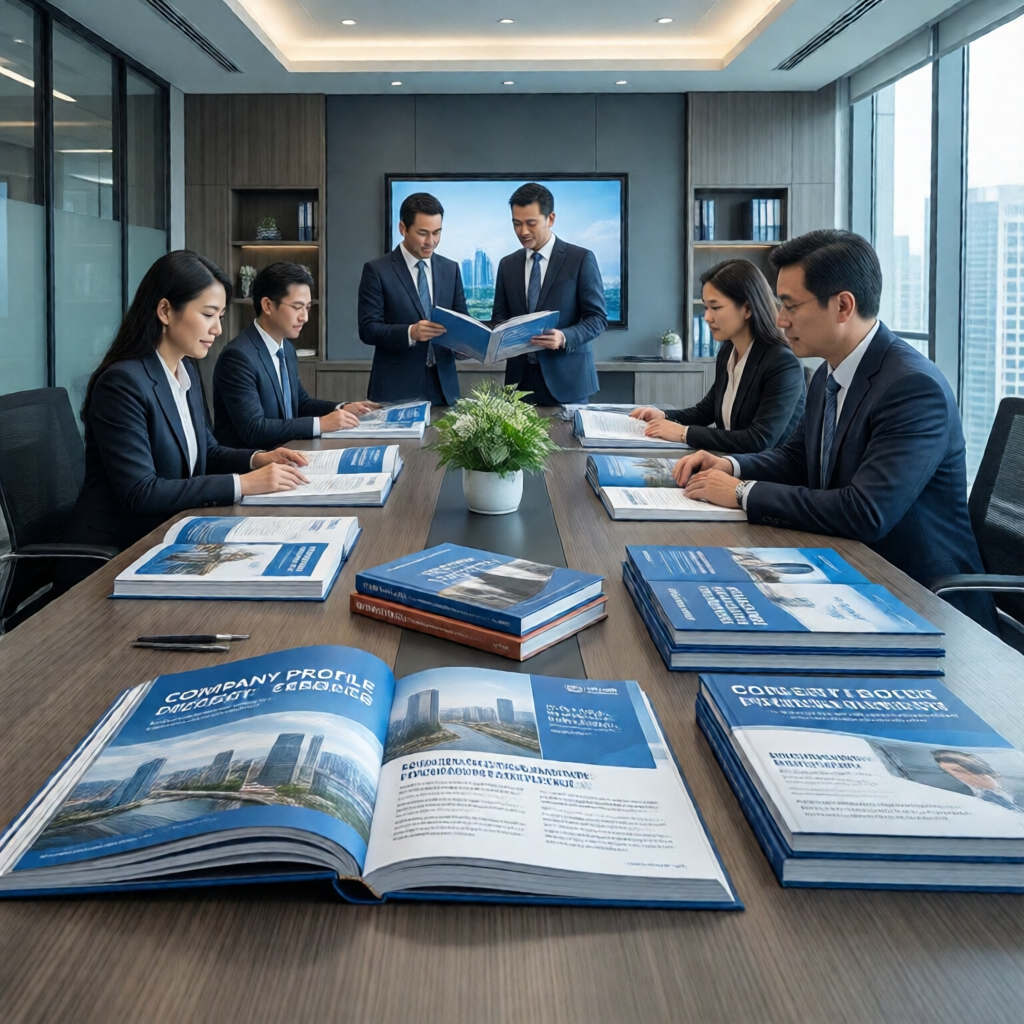
For companies looking for book printing Singapore services, the key is to plan the project around its purpose, audience, design, paper, binding and quantity. This guide explains the main considerations when creating professional corporate books.
Table of Contents
- Why Businesses Still Use Printed Corporate Books
- Types of Corporate Books Businesses Can Print
- Define the Purpose and Target Audience
- Plan the Content and Structure
- Choose the Right Book Size
- Select Paper for Professional Results
- Choose an Appropriate Cover and Binding
- Make the Design Consistent With Your Brand
- Review the File Before Printing
- Decide How Many Copies to Print
- Why Professional Book Printing Matters
- Final Tips for Corporate Book Printing
1. Why Businesses Still Use Printed Corporate Books
Digital communication is now an important part of business, but physical books can provide a different type of presentation.
A well-designed corporate publication gives clients, partners, investors and employees something tangible that they can read and keep. Instead of sending another digital document that may quickly become buried in an inbox, a professionally printed book can create a stronger physical impression.
Corporate books are particularly useful during:
- Business meetings
- Client presentations
- Company events
- Exhibitions and conferences
- Training sessions
- Investor presentations
- Corporate anniversaries
- Product launches
- Internal employee programmes
The physical quality of the publication also communicates attention to detail. Good typography, suitable paper, accurate colour reproduction and professional binding can make a business publication look considerably more polished.
2. Types of Corporate Books Businesses Can Print
The term corporate book can refer to many different types of publications. Before starting the printing process, determine exactly what the book needs to accomplish.
Company Profile Books
A company profile book can introduce a business, its history, management team, services, capabilities, projects and achievements.
It can be useful when meeting potential clients or business partners who need a more detailed introduction than a standard brochure can provide.
Annual Reports
Companies may use printed annual reports to present financial information, milestones, business developments and achievements.
Because annual reports often contain charts, photographs and detailed information, careful attention should be given to layout and colour reproduction.
Training Manuals
Businesses can turn internal training material into professionally printed manuals for employees.
A physical training manual can be easier to distribute during workshops and can provide employees with a reference document after training.
Product and Service Books
Companies with a large range of products or services may create a detailed catalogue-style book.
These publications can contain product photographs, specifications, descriptions, case studies and supporting information.
Corporate History Books
For established companies, a commemorative book can document important milestones, people, projects and achievements.
These books are particularly suitable for company anniversaries and major organisational milestones.
3. Define the Purpose and Target Audience
Before designing the book, establish who will read it and why.
A publication intended for investors may require a different approach from a training manual intended for employees.
Ask questions such as:
- Who will receive the book?
- Will it be used internally or externally?
- Will readers keep it for a long time?
- Does it need to look premium?
- Will it contain many photographs?
- Will readers need to reference specific information regularly?
The answers will influence the design, paper, binding and overall printing specifications.
For example, a premium company profile intended for important clients may benefit from a high-quality cover and professional finishing. A frequently used training manual may need a durable and practical binding instead.
4. Plan the Content and Structure
Corporate publications should have a logical structure.
Start by creating an outline before moving into detailed design. A company profile book, for example, might contain:
- Cover
- Introduction
- Company history
- Mission and values
- Products or services
- Projects and achievements
- Management team
- Case studies
- Contact information
The exact structure will depend on the business.
Organising the content first can reduce unnecessary design revisions later. It also helps identify missing information, duplicated sections and pages that may require additional photographs or graphics.
If the project is based on an existing document, review the content carefully before sending it for book printing services.
5. Choose the Right Book Size
Book size affects both appearance and usability.
A compact format can be convenient for publications that need to be carried around, while a larger format provides more space for photographs, charts and detailed layouts.
Common considerations include:
- Amount of text per page
- Number and size of photographs
- Charts and diagrams
- Portability
- Storage
- Intended presentation environment
A corporate profile with large photographs may benefit from a larger page format. A training manual with mostly text may work better with a practical, easy-to-handle size.
The important point is to choose the format before completing the final layout so that the content can be designed around the actual finished dimensions.
6. Select Paper for Professional Results
Paper selection can significantly affect the appearance and feel of a corporate publication.
For text-heavy books, a paper that is comfortable to read can be more important than a highly glossy surface. Publications containing many photographs may require paper that produces strong colour and image reproduction.
Consider:
- Paper thickness
- Surface finish
- Colour reproduction
- Opacity
- Reading comfort
- Overall weight
For image-heavy corporate books, the paper should complement the photography and graphics. For manuals, readability and durability may be higher priorities.
If you are comparing different paper options, reviewing physical samples before ordering a large quantity can be useful.
7. Choose an Appropriate Cover and Binding
The cover and binding should match the purpose of the publication.
A premium corporate book may use a hardcover construction when durability and presentation are important. A paperback may be more practical for larger quantities or publications that need to remain lightweight.
The binding also affects how the book opens and how it feels in the hands.
Consider:
- Expected usage
- Number of pages
- Required durability
- Budget
- Desired appearance
- Whether the book needs to lie relatively flat
Businesses should avoid choosing binding purely based on appearance. A publication that will be handled frequently needs a construction suitable for repeated use.
For more detailed comparisons, businesses can review a book binding guide before finalising the specification.
8. Make the Design Consistent With Your Brand
A corporate book should look like it belongs to the company.
This means maintaining consistency in areas such as:
- Logo placement
- Brand colours
- Typography
- Photography style
- Page layouts
- Headings
- Icons and graphics
However, corporate branding does not mean placing a logo on every page. A professional publication usually benefits from a clean visual hierarchy.
The goal is to make the company identity recognisable while keeping the content easy to read.
Photography is also important. Low-resolution images can look acceptable on a computer screen but appear poor when enlarged for print. Use suitable high-resolution images and check them carefully during the design process.
9. Review the File Before Printing
One of the most important stages of any corporate printing project is checking the final artwork.
Before sending the files to a printer, review:
- Spelling
- Page numbers
- Company names
- Contact information
- Dates
- Product specifications
- Images
- Captions
- Charts
- Tables
- Headers and footers
- Cover artwork
Check the document at actual size rather than relying only on a zoomed-out computer view.
It is also useful to have someone who was not involved in the design review the final document. A fresh pair of eyes may identify errors that the original designer has become accustomed to overlooking.
A proper book printing checklist can help ensure important details are not missed.
10. Decide How Many Copies to Print
Quantity should be based on how the publication will be used.
For example, a company may need copies for:
- Sales representatives
- Existing clients
- Potential clients
- Business partners
- Employees
- Events
- Exhibitions
- Corporate archives
Avoid automatically printing an unnecessarily large quantity. At the same time, printing too few copies can create additional production costs when another batch is required shortly afterward.
Businesses should consider both current requirements and expected future demand when determining the print quantity.
For projects requiring a smaller number of copies, short-run book printing can be worth considering.
11. Why Professional Book Printing Matters
A corporate book represents more than the information printed inside it.
When a potential client receives a professionally produced publication, the physical quality contributes to the overall impression of the company.
A poorly printed book can have the opposite effect. Incorrect colours, blurry photographs, weak binding, inconsistent trimming or low-quality covers can make an otherwise strong publication appear less professional.
Professional production helps bring the original design closer to the intended finished result.
This is particularly important when the publication will be used in client meetings, corporate events, exhibitions or other situations where presentation matters.
12. Final Tips for Corporate Book Printing
A successful corporate book printing project starts well before the printing machine is running.
Businesses should:
- Define the purpose of the publication.
- Identify the target audience.
- Plan the content before designing every page.
- Select an appropriate book size.
- Choose paper based on the content and intended use.
- Select a suitable cover and binding.
- Maintain consistent company branding.
- Use high-quality photographs and graphics.
- Proofread the complete document carefully.
- Confirm the final quantity before production.
- Request a proof when appropriate.
- Work with an experienced professional printer.
It is also worth reviewing your previous book printing projects when planning a new publication. This can help identify which specifications worked well and which aspects could be improved.
Conclusion
Corporate books can be valuable tools for businesses that want to present information in a professional and memorable format. Company profiles, annual reports, training manuals, product books and corporate history publications all have different requirements, so there is no single specification that works for every project.
The best results come from considering the purpose, audience, content, size, paper, binding, design and quantity together.
For businesses looking for book printing Singapore solutions, careful preparation is just as important as the printing process itself. A well-planned publication can turn company information into a polished physical resource that supports sales, communication, training and brand presentation.