The cover is one of the first things people notice when they pick up a printed book. Before reading the title, introduction or first page, readers experience the cover through its appearance and physical feel.
Choosing the right cover finish can therefore make a significant difference to the overall presentation of a book. A suitable finish can protect the cover, improve its appearance and help create the impression you want readers to have.
Whether you are printing a novel, children’s book, company publication, photography book or educational material, understanding the different finishing options can help you make a better decision.
For anyone planning book printing Singapore, this guide explains the main considerations when choosing a professional cover finish.
Table of Contents
- Why Book Cover Finishing Matters
- What Is a Book Cover Finish?
- Matte Finish
- Gloss Finish
- Laminated Covers
- Matte vs Gloss: Which Is Better?
- Choosing a Finish Based on Your Book Type
- How Cover Finish Affects Durability
- Consider Your Book Design
- Consider Your Budget and Quantity
- Common Mistakes When Choosing a Cover Finish
- Final Tips for Choosing the Right Finish
1. Why Book Cover Finishing Matters
A book cover needs to do more than display a title and image.
It also protects the book and contributes to the overall physical experience. A well-chosen finish can make colours appear more attractive, reduce the effects of regular handling and give the publication a more professional appearance.
For example, a glossy cover can make photographs and colourful graphics appear vibrant. A matte finish can provide a more understated and sophisticated appearance.
The correct choice depends on the type of book, its intended audience and how it will be used.
When planning a professional book printing project, cover finishing should therefore be considered during the design stage rather than treated as an afterthought.
2. What Is a Book Cover Finish?
A cover finish is a treatment applied to the printed cover to change its appearance, texture or durability.
Different finishing options can affect:
- Surface appearance
- Light reflection
- Colour presentation
- Texture
- Resistance to handling
- Overall perceived quality
The most common choices for many book projects are matte and gloss finishes, often combined with lamination.
The best option is not necessarily the most expensive one. Instead, the finish should match the purpose and design of the publication.
3. Matte Finish
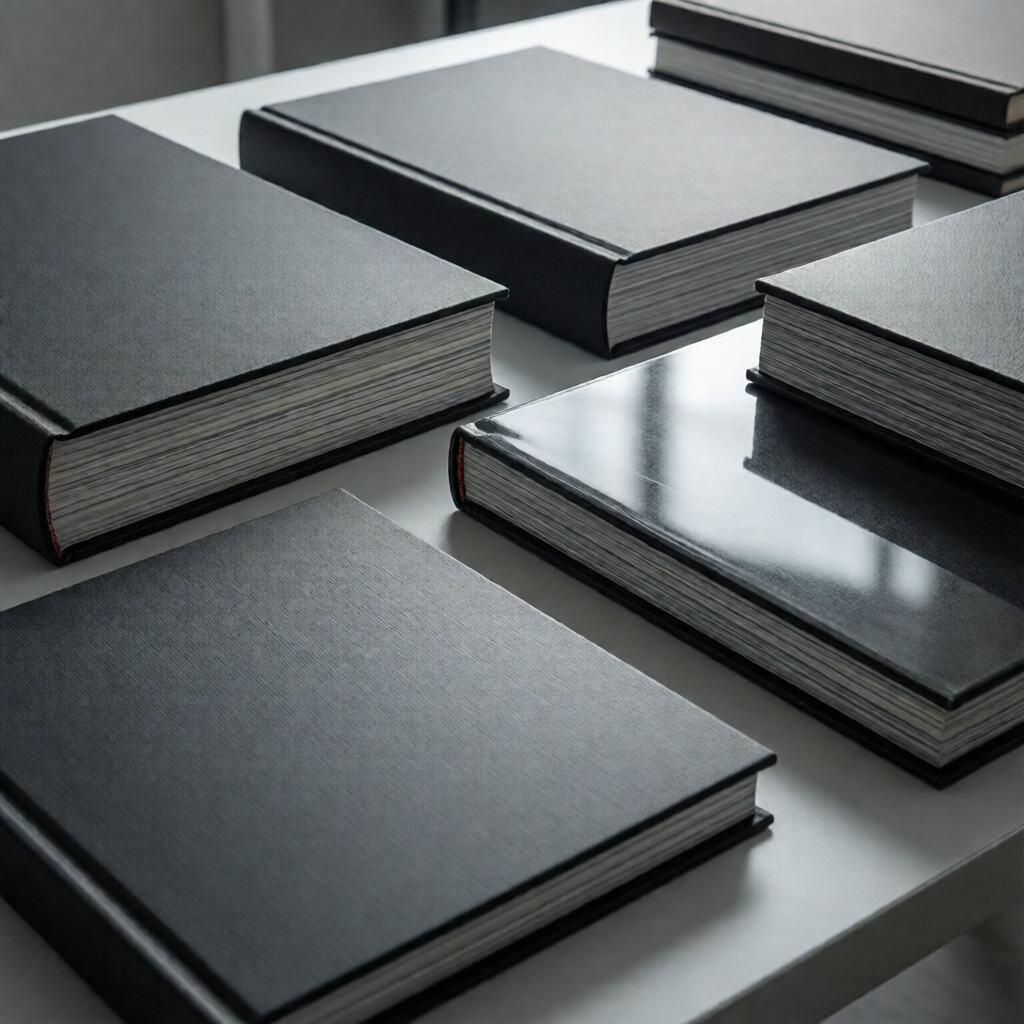
Matte finishes have a smooth surface with little reflection.
This gives the cover a softer and more understated appearance. Because there is less glare, text can also be easier to view under strong lighting conditions.
Matte finishes are often suitable for:
- Novels
- Business books
- Professional publications
- Memoirs
- Educational books
- Minimalist designs
- Corporate publications
A matte surface can create a premium and contemporary impression without appearing overly reflective.
Another advantage is that fingerprints and reflections may be less noticeable compared with highly glossy surfaces.
However, matte finishes can slightly change how certain colours and photographs appear. If your cover relies heavily on bright, vibrant photography, you may want to compare a matte sample with a gloss sample before making a final decision.
4. Gloss Finish
Gloss finishes have a smooth and reflective surface.
They can make colours appear brighter and photographs more vivid, making them particularly useful for image-heavy publications.
Gloss finishes can work well for:
- Children’s books
- Photography books
- Travel books
- Recipe books
- Product publications
- Colourful educational materials
- Marketing-focused books
If the cover contains a large photograph or colourful illustration, gloss can help create a visually striking result.
However, reflections can sometimes make text harder to see under direct lighting. Fingerprints and smudges may also be more noticeable on a highly reflective surface.
For this reason, the visual style of the cover should always be considered alongside the finish.
5. Laminated Covers
Lamination adds a protective layer over the printed cover.
It can improve the durability of the cover and provide either a matte or glossy surface depending on the type selected.
This can be particularly useful for books that will be handled frequently.
Examples include:
- Training manuals
- Children’s books
- Educational books
- Business manuals
- Product catalogues
- Frequently handled reference books
Lamination can help protect printed artwork from everyday handling and contribute to a more finished appearance.
For publications intended to be kept for a long time, choosing a suitable protective finish can be an important part of the overall book printing services specification.
6. Matte vs Gloss: Which Is Better?
There is no universal winner between matte and gloss.
The right option depends on the publication.
| Feature | Matte | Gloss |
|---|---|---|
| Appearance | Soft and sophisticated | Bright and reflective |
| Reflection | Low | High |
| Photography | Subtle | Vibrant |
| Text-heavy covers | Excellent | Good |
| Colourful artwork | Good | Excellent |
| Professional appearance | Excellent | Excellent |
| Fingerprint visibility | Generally lower | Generally higher |
| Suitable for photographs | Yes | Very suitable |
If your book has a minimalist design with mostly text, matte may be a natural choice.
If your cover depends on strong photography or colourful artwork, gloss may produce a more striking result.
When uncertain, comparing physical samples is one of the best ways to make the decision.
7. Choosing a Finish Based on Your Book Type
The type of publication should strongly influence the cover finish.
Novels
Novels often benefit from a clean, understated appearance. Matte can work particularly well for literary and fiction titles because it provides a refined appearance.
Children’s Books
Children’s books often use bright illustrations and strong colours. Gloss can help make these visual elements stand out.
Because children’s books may also experience frequent handling, durability should be considered alongside appearance.
Photography Books
Photography books depend heavily on image quality. A gloss finish can enhance the visual impact of photographs, although matte can also create an elegant fine-art appearance depending on the design.
Corporate Books
Company profiles and corporate publications need to look professional and consistent with the company’s image.
Matte can provide a sophisticated appearance, while gloss may be appropriate for publications containing colourful photographs or product images.
Recipe Books
Recipe books often contain photographs of food, ingredients and finished dishes. Gloss can help make these images visually appealing.
However, if the book will be used frequently in a kitchen, durability and ease of cleaning should also be considered.
Educational Books
Educational books may need to balance readability, durability and cost.
A practical laminated cover can be useful when students or teachers are expected to handle the book frequently.
8. How Cover Finish Affects Durability
Appearance is only one consideration.
A book that will be handled regularly needs a cover that can withstand repeated use.
For example, a company may print a small number of premium books for important clients. In this situation, appearance may be the highest priority.
A school or training organisation may instead distribute hundreds of books that are expected to be used throughout a course. Durability may therefore be more important.
Think about the environment in which the book will be used.
Will it:
- Remain on a bookshelf?
- Be carried between meetings?
- Be handled by children?
- Be used repeatedly during training?
- Be transported frequently?
- Be displayed at events?
Answering these questions can help determine whether additional protective finishing is worthwhile.
9. Consider Your Book Design
The cover design should be considered together with the finish.
A highly detailed photographic cover may benefit from a finish that enhances the image, while a minimalist design may look better with a subtle surface.
Pay attention to:
- Background colours
- Photographs
- Typography
- Fine details
- Large areas of solid colour
- Illustrations
- Brand colours
You should also remember that printed colours may not appear exactly the same as they do on a computer monitor.
The combination of paper, ink, lighting and finishing can influence the final appearance.
For important projects, requesting a physical proof can help you evaluate the actual result before committing to the full print run.
10. Consider Your Budget and Quantity
The cover finish should also fit within the project’s budget.
If you are producing a small number of premium books, spending more on finishing may make sense because the additional cost per book may be manageable.
For large quantities, even a relatively small finishing cost per copy can have a noticeable effect on the total project cost.
This does not mean businesses should always choose the cheapest option.
Instead, consider the purpose of the book and the value it needs to deliver.
A premium corporate publication presented to clients may justify a higher-quality finish. An internal document that will be used temporarily may not require the same level of finishing.
This is why understanding the full book printing cost is useful before finalising your specifications.
11. Common Mistakes When Choosing a Cover Finish
Several mistakes can lead to disappointing results.
Choosing Based Only on Appearance
A finish may look attractive but not be suitable for the way the book will be used.
Always consider durability and handling.
Ignoring the Cover Design
The same finish can produce very different results depending on the artwork.
Consider the colours, photographs and typography before deciding.
Printing Without Reviewing a Sample
Computer screens cannot perfectly reproduce the physical appearance of printed materials.
When the project is important, a physical sample or proof can provide useful information.
Choosing the Most Expensive Option Automatically
Premium finishing is not always necessary.
The objective is to choose the finish that best matches the publication rather than simply selecting the most expensive specification.
Forgetting About the Inside Pages
The cover is important, but the rest of the book also needs to work as a complete product.
Paper, binding, colour printing and page layout should complement the cover.
12. Final Tips for Choosing the Right Finish
Before sending your book to print, consider the following checklist:
- Identify the purpose of the book.
- Consider who will read and handle it.
- Review the cover artwork.
- Decide whether a matte or gloss appearance suits the design.
- Consider whether additional lamination is appropriate.
- Think about how frequently the book will be handled.
- Consider the expected print quantity.
- Review the total production budget.
- Compare physical samples when possible.
- Request a proof for important projects.
- Check the final cover dimensions and artwork.
- Confirm the finishing specification before production.
A professional printer can also help you understand how different finishing options may affect the final result.
Conclusion
Choosing the right book cover finish is an important part of creating a professional printed publication. Matte, gloss and laminated finishes each offer different visual and practical benefits.
Matte can provide a sophisticated and low-reflection appearance, while gloss can make colourful images and photographs stand out. Lamination can add another level of protection for books that will be handled frequently.
The best choice ultimately depends on the book’s purpose, design, audience, expected usage and budget.
By considering these factors before production, you can select a cover finish that complements the design and helps your finished book look professional from the moment readers pick it up.
For businesses, authors and organisations planning book printing in Singapore, taking the time to select the right finishing option can make a noticeable difference to the final printed product.