Before a book goes into final production, reviewing a proof is one of the most important steps in the printing process. A proof provides an opportunity to inspect the actual layout and identify problems before a complete print run is produced.
This is particularly important for books containing many pages, photographs, illustrations, tables or detailed formatting. A small mistake that is easy to overlook on a computer screen can become much more obvious when viewed as a physical book.
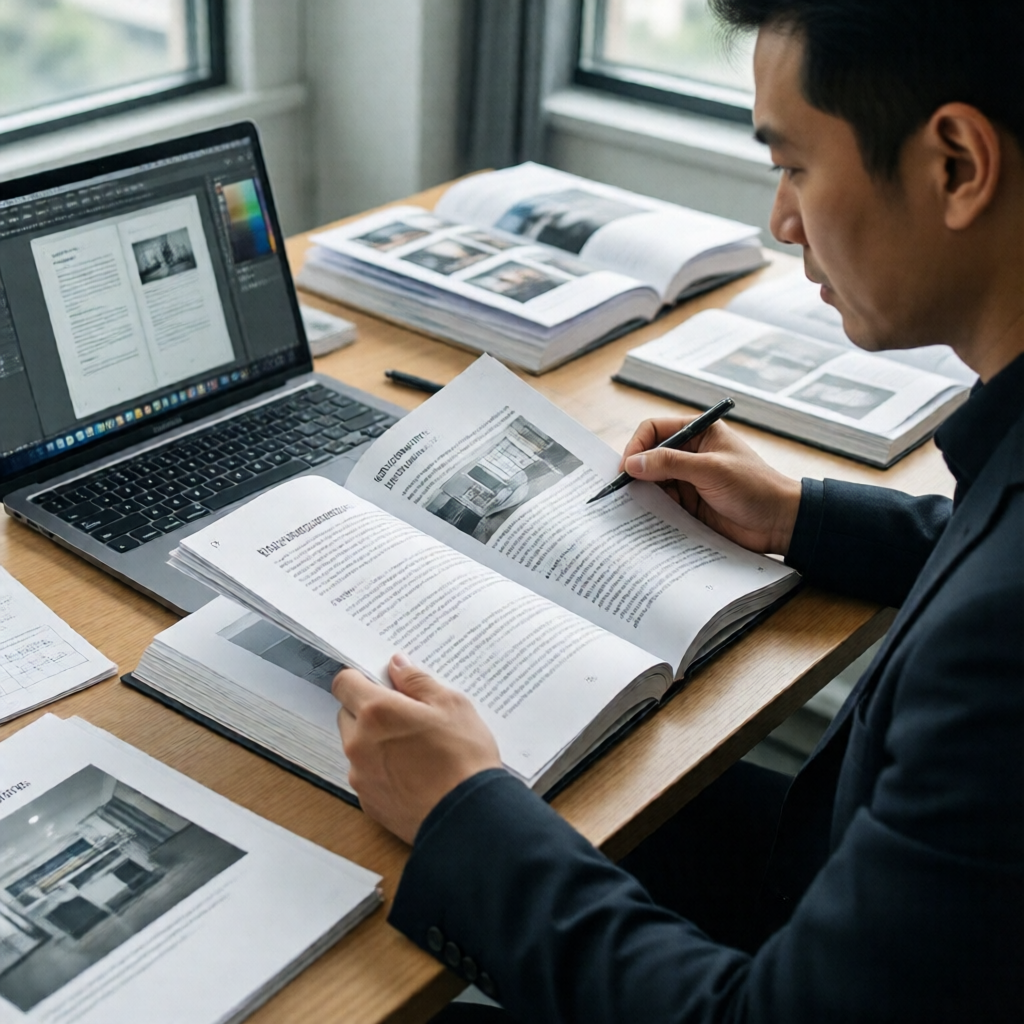
For authors, businesses, schools and organisations planning book printing Singapore, proper proof preparation can reduce the risk of costly corrections and help ensure the final publication matches expectations.
Table of Contents
- What Is a Book Proof?
- Why Proofing Is Important
- Complete the Manuscript Before Proofing
- Check the Book Layout
- Review Page Numbers and Chapter Order
- Check Images and Graphics
- Review the Cover Separately
- Check Fonts and Formatting
- Proofread the Actual Printed Pages
- What to Look for in a Physical Proof
- Make Corrections Carefully
- Approving the Final Proof
- Final Book Proofing Checklist
1. What Is a Book Proof?
A book proof is a version of the book produced for review before the final printing run.
It allows the author or project owner to inspect how the content appears in its intended physical format.
Depending on the printing process, the proof may be used to evaluate:
- Page layout
- Text positioning
- Images
- Colours
- Page sequence
- Cover appearance
- Binding
- Overall physical presentation
A digital PDF proof can be useful for checking content and layout, while a physical proof provides additional information about the actual printed result.
The exact proofing process can vary depending on the printer and project.
2. Why Proofing Is Important
It can be tempting to assume that a finished PDF will automatically print correctly.
However, the final physical product can reveal problems that were not obvious during digital review.
For example, you may discover:
- A heading appears too close to the edge
- A photograph is darker than expected
- A page break creates an awkward layout
- A caption is missing
- A page number is incorrect
- A section begins on the wrong page
- An image has been positioned incorrectly
- The cover does not appear as expected
Proofing provides a final opportunity to identify such problems.
It is especially valuable for larger professional book printing projects, where correcting an issue after production may be considerably more difficult.
3. Complete the Manuscript Before Proofing
Ideally, the manuscript should be substantially complete before the proofing stage.
Avoid sending a book for proofing while major sections are still being rewritten.
Major content changes can affect:
- Page count
- Page breaks
- Chapter positions
- Table of contents
- Image placement
- Cover specifications
- Binding requirements
Before preparing the proof, make sure the manuscript has undergone a thorough editorial review.
Check spelling, grammar, punctuation and factual information before focusing on the physical appearance of the book.
This allows the proofing stage to concentrate on the final production details.
4. Check the Book Layout
One of the first things to inspect is the overall page layout.
Look at the book from beginning to end rather than checking only selected pages.
Review:
- Margins
- Paragraph spacing
- Headings
- Line spacing
- Image placement
- Page breaks
- Chapter openings
- Tables
- Captions
- Headers and footers
Pay particular attention to pages where the layout changes.
For example, a chapter containing a large photograph or table may require different spacing from an ordinary text page.
A consistent layout generally makes a book easier and more enjoyable to read.
5. Review Page Numbers and Chapter Order
Page numbering errors can be surprisingly easy to overlook in a digital document.
Check that page numbers:
- Appear in the correct location
- Follow the correct sequence
- Do not appear on pages where they should be omitted
- Match the table of contents
Also confirm that chapters appear in the correct order.
This is particularly important when several people have contributed content to the book.
Check chapter titles against the table of contents and make sure the final page numbers correspond correctly.
If the book contains appendices, indexes or reference sections, confirm that they have also been placed correctly.
6. Check Images and Graphics
Images should be carefully reviewed in the proof.
Do not simply assume that every image is correct because it looked good in the original design file.
Check:
- Image sharpness
- Cropping
- Position
- Size
- Colour
- Brightness
- Captions
- Alignment
Look closely at important photographs and illustrations.
If the book contains charts, diagrams or technical drawings, check that labels and small details remain readable.
Images that extend to the edge of the page should also be inspected carefully to ensure they appear as intended.
For image-heavy publications, this stage can be especially important when preparing colour book printing.
7. Review the Cover Separately
The cover should receive its own detailed review.
Check the front cover, back cover and spine where applicable.
Look for:
- Correct title
- Correct author name
- Correct artwork
- Proper alignment
- Appropriate margins
- Suitable image placement
- Correct spine information
- Back-cover text
- Overall colour appearance
The spine is particularly important for books with enough pages to require one.
Make sure text on the spine is positioned correctly and that it matches the final book orientation.
A professional cover can significantly influence the appearance of the finished publication, so do not treat the cover as an afterthought.
You can also review a book cover design guide before approving your final artwork.
8. Check Fonts and Formatting
Typography should remain consistent throughout the book.
Look for:
- Font changes
- Incorrect font sizes
- Missing bold or italic formatting
- Inconsistent headings
- Strange line breaks
- Uneven paragraph spacing
- Missing characters
- Unusual symbols
Pay attention to special characters and foreign-language text.
If the book contains quotations, footnotes or references, check that their formatting is consistent.
Books with many contributors can sometimes contain inconsistent formatting because different sections were created separately.
A final proof is a good opportunity to standardise these details.
9. Proofread the Actual Printed Pages
Reading the physical proof is different from reading the original manuscript.
The printed page changes the context in which you see the words.
Read through the actual pages and look for obvious mistakes.
Check:
- Spelling
- Names
- Dates
- Numbers
- Headings
- Captions
- Punctuation
- Missing words
- Repeated words
- Incorrect references
If possible, have another person review the proof as well.
A second reader may notice errors that the author has become accustomed to overlooking.
This is particularly useful for books containing personal names, technical information or large amounts of numerical data.
10. What to Look for in a Physical Proof
A physical proof provides information that a screen cannot fully reproduce.
Hold the book and assess:
Paper
Does the paper feel suitable for the content?
Is the text comfortable to read?
Do photographs appear appropriately?
Print Quality
Look for unexpected marks, uneven printing or other visible production issues.
Colours
Check whether important images and design elements appear as expected.
Binding
Open and close the book several times.
Check whether the pages are securely assembled and whether the book opens comfortably.
Cover
Look at the cover from different angles and distances.
Consider whether the final physical appearance matches your original design.
11. Make Corrections Carefully
If problems are discovered during proofing, record them clearly.
Do not rely on memory.
Create a correction list containing:
- Page number
- Problem
- Required correction
- Image or section affected
For example:
Page 27: Correct spelling of author’s name.
Page 48: Replace photograph with updated version.
Page 73: Move heading to next page.
This makes communication with the designer or printer much easier.
After corrections are made, review the affected pages again.
Do not assume that correcting one page cannot affect another page.
A text change can sometimes alter page breaks and cause subsequent content to move.
12. Approving the Final Proof
Only approve the proof once the complete publication has been reviewed.
Before giving final approval, confirm:
- Manuscript is final
- Layout is correct
- Page numbers are correct
- Images are correct
- Cover is correct
- Paper is suitable
- Binding is suitable
- Major printing issues have been addressed
- Quantity is confirmed
Keep a copy of the final approved PDF for your records.
This can be useful if the book is reprinted later.
If another print run is required in the future, the approved file can provide a clear reference for the intended version.
13. Final Book Proofing Checklist
Use the following checklist before approving your book for production:
- Confirm the final manuscript.
- Review every page.
- Check chapter order.
- Check page numbers.
- Compare the table of contents with the actual book.
- Review all photographs.
- Check captions and illustrations.
- Inspect fonts and formatting.
- Review the cover and spine.
- Check margins and page edges.
- Inspect the physical proof.
- Check paper quality.
- Check print quality.
- Test the binding.
- Record all corrections.
- Review corrected pages again.
- Save the final approved file.
- Confirm the final print quantity.
Conclusion
Proofing is one of the final safeguards between a completed manuscript and a finished printed book.
Taking the time to review the physical proof can help identify layout problems, printing issues, image errors and content mistakes before the complete print run is produced.
The process does not need to be complicated. A systematic review of the manuscript, layout, photographs, cover, paper and binding can make a significant difference.
For anyone preparing a book printing project in Singapore, professional proofing provides an important opportunity to make sure the final book looks, reads and feels the way it was intended before production begins.