A company profile book can provide a professional way to present a business, its history, capabilities, achievements and services. Unlike a simple brochure or digital presentation, a printed company profile creates a physical publication that can be handed to clients, business partners, investors and other stakeholders.
For businesses preparing a company profile, printing should be considered from the beginning of the design process. The choice of page size, paper, cover, images, binding and quantity can all influence how the final publication is perceived.
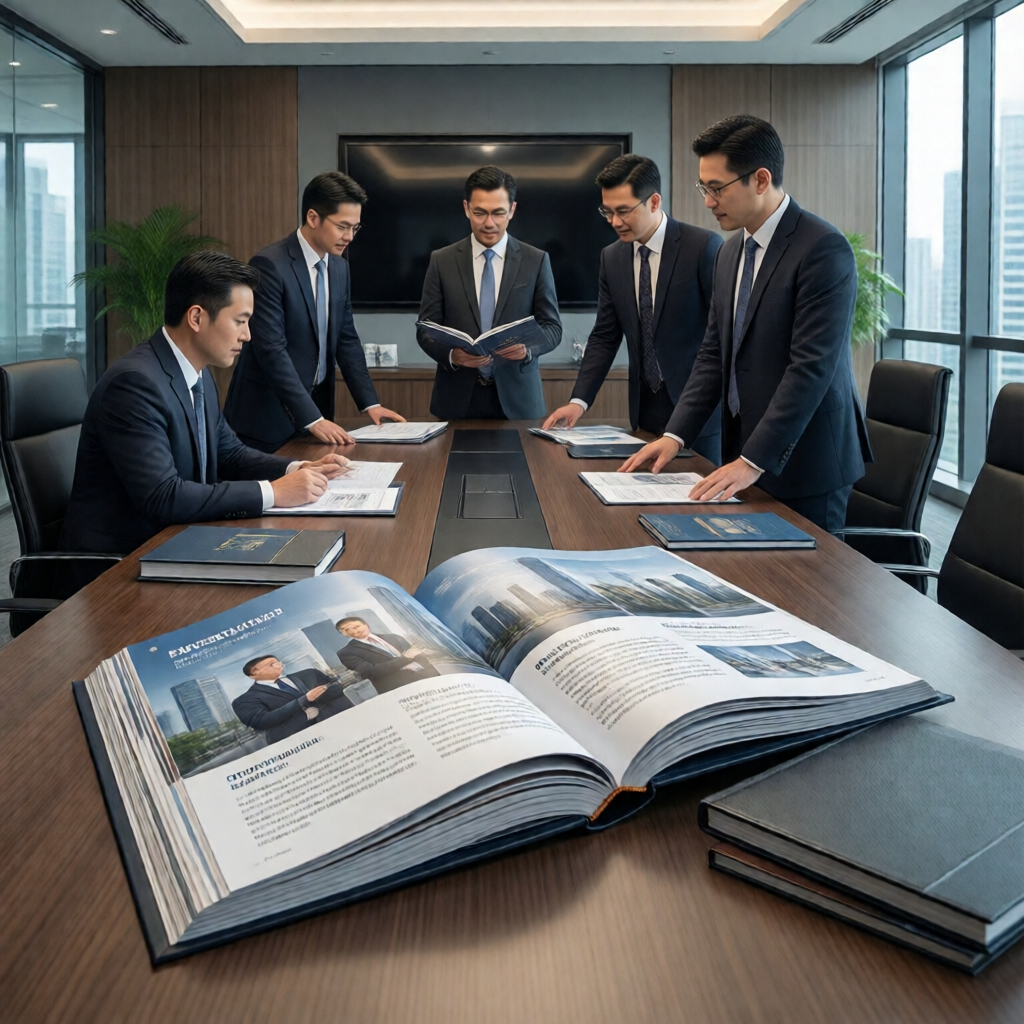
Whether the book is intended for client meetings, corporate events, exhibitions or business presentations, understanding the process of book printing Singapore can help businesses create a professional and useful company publication.
Table of Contents
- What Is a Company Profile Book?
- Why Print a Company Profile Book?
- Define Your Target Audience
- Plan the Content Structure
- Include the Right Company Information
- Choose the Right Book Size
- Select Suitable Paper
- Use Professional Photography
- Design a Strong Cover
- Choose the Right Binding
- Prepare Your Company Profile for Printing
- Decide How Many Copies to Print
- Proofread and Review the Final Book
- Final Tips for Company Profile Book Printing
1. What Is a Company Profile Book?
A company profile book is a printed publication that introduces a business in greater detail than a typical flyer or short brochure.
It can explain who the company is, what it does, how it operates and why customers or business partners should consider working with it.
Depending on the company, a profile book may contain:
- Company history
- Mission and values
- Products and services
- Management information
- Business capabilities
- Major projects
- Client information
- Certifications
- Awards
- Company facilities
- Team photographs
- Contact information
The content should be organised logically so that readers can understand the company without having to search through unrelated information.
2. Why Print a Company Profile Book?
Digital company information is convenient, but printed publications still have practical uses in business environments.
A physical profile book can be brought into:
- Client meetings
- Business presentations
- Trade exhibitions
- Networking events
- Sales meetings
- Corporate events
- Supplier meetings
- Investor discussions
A printed publication can also serve as a reference document after a meeting.
For companies providing professional services, engineering, construction, manufacturing or other business-to-business services, a detailed company profile can provide more room to explain capabilities than a small promotional leaflet.
A well-produced corporate book printing project can therefore function as both a presentation tool and a long-term company reference.
3. Define Your Target Audience
Before writing and designing the book, determine who will read it.
A company profile aimed at potential customers may focus heavily on services, capabilities and completed projects.
A profile intended for investors may place greater emphasis on company history, management, growth and business information.
A publication for business partners may focus on capabilities, facilities and areas of cooperation.
Consider:
- Who will receive the book?
- What do they already know about the company?
- What information do they need?
- What questions are they likely to have?
- What action should they take after reading it?
Understanding the audience can help prevent the profile from becoming a collection of generic company information.
4. Plan the Content Structure
A clear structure makes the company profile easier to read.
A possible structure could be:
- Front cover
- Company introduction
- Company history
- Mission and values
- Products and services
- Capabilities
- Projects or case studies
- Facilities
- Team or management
- Certifications and awards
- Client information
- Contact details
- Back cover
The exact structure should reflect the business.
A construction company may place completed projects near the centre of the book, while a manufacturer may focus on production capabilities and facilities.
Avoid including information simply because it exists.
Every section should contribute to the overall purpose of the publication.
5. Include the Right Company Information
A company profile should provide useful information without becoming unnecessarily repetitive.
Important sections may include a short history of the company and an explanation of its current activities.
Service descriptions should be clear and specific.
Instead of using large blocks of promotional language, consider presenting information using:
- Short paragraphs
- Headings
- Lists
- Project summaries
- Statistics
- Photographs
- Diagrams
- Case studies
Completed projects can be particularly useful because they provide examples of the company’s capabilities.
Where appropriate, include project names, locations, services provided and relevant results.
However, all information should be checked carefully before publication.
6. Choose the Right Book Size
The page dimensions should reflect the type of company profile being created.
A standard format may be appropriate for a text-heavy publication.
A larger format can provide more space for project photographs, architectural images, product photography or diagrams.
Consider how the book will be used.
If sales representatives will carry copies to meetings, excessive size or weight may be inconvenient.
If the publication will primarily be presented during formal meetings, a larger premium format may create a stronger visual presentation.
Think about:
- Amount of content
- Photograph size
- Portability
- Page count
- Storage
- Production cost
The page size should be finalised before completing the layout.
7. Select Suitable Paper
Paper selection contributes to the overall quality of a company profile book.
A publication containing many photographs may require paper that reproduces images effectively.
A text-heavy profile may prioritise comfortable reading.
Consider:
- Paper thickness
- Surface finish
- Image reproduction
- Readability
- Durability
- Overall weight
The cover and interior pages do not necessarily need to use the same paper specification.
A more substantial cover can provide additional protection while the interior paper can be selected for comfortable reading and good image reproduction.
When comparing options, physical paper samples can be more useful than viewing specifications on a screen.
A book printing paper guide can also help when evaluating the different choices.
8. Use Professional Photography
Photography can have a major influence on a company profile.
Poor-quality or inconsistent photographs can make an otherwise professional publication look less polished.
Where possible, use high-quality photographs of:
- Company premises
- Staff
- Products
- Equipment
- Completed projects
- Manufacturing facilities
- Services in operation
- Corporate events
Avoid using unnecessarily small or heavily compressed images.
Images should also be consistent in terms of colour, cropping and overall style.
If professional photography is available, consider using it for important sections of the book.
9. Design a Strong Cover
The cover creates the first impression of the company profile.
It should communicate the identity of the business clearly without becoming overcrowded.
A professional cover might include:
- Company name
- Company logo
- Main photograph
- Short description
- Publication title
- Brand colours
Avoid filling the cover with excessive text.
A strong photograph combined with a clean layout can often create a more professional appearance than a complicated design.
Brand consistency is also important.
Colours, typography and visual elements should align with the company’s existing branding.
For additional guidance, review a professional book cover design guide before finalising the cover artwork.
10. Choose the Right Binding
The binding should reflect how the company profile will be used.
A premium hardcover can be appropriate for high-level presentations, important corporate meetings or special company publications.
A softcover can provide a practical solution for sales teams, exhibitions and larger print quantities.
Consider:
- Number of pages
- Intended usage
- Durability
- Appearance
- Budget
- Quantity
The binding should also work with the page count and final book thickness.
Review a book binding guide if you are comparing several options before production.
11. Prepare Your Company Profile for Printing
Once the content and design are complete, the publication must be prepared for printing.
Review:
- Page dimensions
- Margins
- Bleed
- Image resolution
- Colour settings
- Fonts
- Page numbering
- Cover dimensions
- Image placement
- Text alignment
Make sure the logo is displayed correctly throughout the publication.
Check that photographs have not been accidentally stretched or distorted.
The contact information should receive particular attention.
A phone number, email address, website address or office address should be verified before final approval.
Using a book printing file preparation checklist can help identify technical problems before the file is submitted.
12. Decide How Many Copies to Print
The quantity depends on how the company plans to use the publication.
For example, copies may be distributed to:
- Sales representatives
- Existing customers
- Potential customers
- Business partners
- Suppliers
- Investors
- Event visitors
- Corporate guests
Create an estimated distribution list before deciding on the quantity.
Consider how frequently the company expects to use the profile and whether the information may change.
If the company profile is updated frequently, producing a smaller initial quantity may be more practical.
For limited requirements, short-run book printing can provide flexibility.
If the profile is expected to remain relevant for a longer period, a larger quantity may make sense depending on storage and budget.
13. Proofread and Review the Final Book
Company profiles often contain detailed information, so proofreading is essential.
Check:
- Company name
- Logo
- Addresses
- Phone numbers
- Email addresses
- Website
- Employee names
- Project names
- Dates
- Statistics
- Certifications
- Client information
- Captions
Photographs should also be checked to make sure they match the correct projects and descriptions.
If multiple departments contributed information, have the relevant department review its section before final approval.
It is also useful to review a physical proof before approving the full print run.
Check the actual paper, colour reproduction, layout and binding rather than relying only on a digital PDF.
14. Final Tips for Company Profile Book Printing
Before sending the company profile for production:
- Define the target audience.
- Establish the purpose of the publication.
- Organise the content logically.
- Select high-quality photographs.
- Choose the final book size.
- Select suitable paper.
- Design a professional cover.
- Choose an appropriate binding.
- Check company information carefully.
- Review all photographs and captions.
- Prepare the print-ready artwork.
- Inspect a physical proof.
- Confirm the final quantity.
- Keep the approved production file for future reprints.
It is also worth considering how long the company profile is expected to remain current.
If services, management information or contact details change frequently, avoid filling the publication with information that could become outdated quickly.
Conclusion
A company profile book can be a valuable physical tool for businesses that need to present their capabilities professionally.
The strongest publications combine useful information with clear structure, high-quality photography and appropriate printing specifications.
From selecting paper and binding to preparing photographs and checking the final proof, each decision contributes to the finished product.
For businesses planning company profile book printing Singapore, careful preparation can turn a standard corporate document into a polished printed publication suitable for client meetings, business presentations, exhibitions and long-term company reference.