Printed books can play an important role in school life. From yearbooks and student project collections to educational workbooks and commemorative publications, professionally printed materials can preserve achievements and provide students with something tangible to keep.
School printing projects can also involve many different contributors, including teachers, students, administrators, photographers and designers. This makes careful planning particularly important.
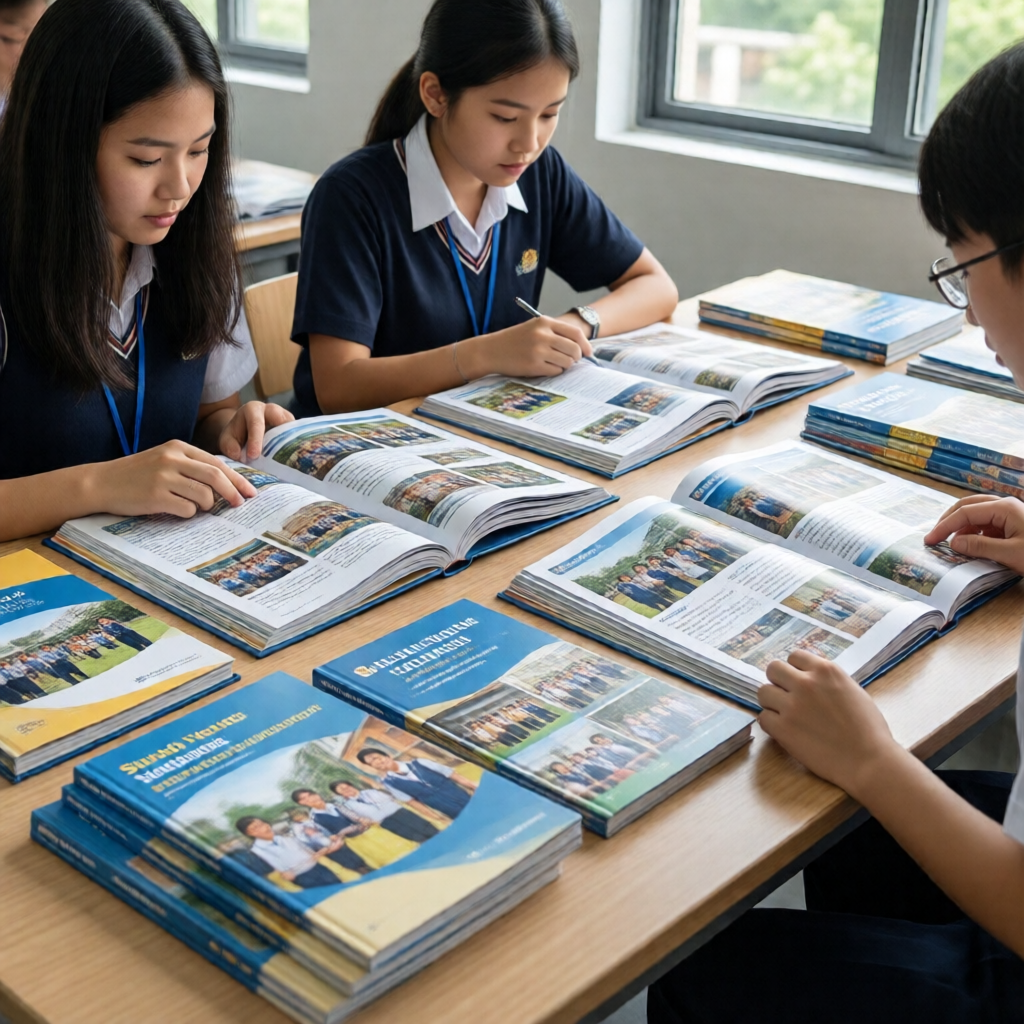
Whether a school is producing a yearbook, a student writing collection or an educational publication, understanding the basics of book printing Singapore can help ensure the finished product meets both practical and presentation requirements.
Table of Contents
- Why Schools Print Books
- Common Types of School Books
- Planning a School Printing Project
- Creating a Yearbook
- Printing Student Projects
- Designing Educational Books
- Choosing the Right Book Size
- Selecting Suitable Paper
- Colour Printing for School Publications
- Choosing the Right Binding
- Preparing Photographs and Student Artwork
- Reviewing and Proofreading
- Deciding How Many Copies to Print
- Final Tips for School Book Printing
1. Why Schools Print Books
Schools produce printed books for many different reasons.
A physical publication can preserve an important period in a student’s education and create a lasting record of school activities, achievements and experiences.
Printed books can also be useful for presenting student work.
Instead of keeping projects only as digital files, schools can compile selected work into a professionally designed publication.
Common purposes include:
- Recording school events
- Preserving student achievements
- Creating yearbooks
- Displaying student artwork
- Publishing student writing
- Producing educational materials
- Creating commemorative books
- Documenting school programmes
A well-designed book can bring together photographs, written content and artwork in a format that students and families can keep.
2. Common Types of School Books
The type of book being produced should be established before planning the printing specifications.
School Yearbooks
Yearbooks commonly contain student photographs, class information, school activities, events, achievements and messages.
They are often highly visual and therefore require careful consideration of colour printing and image quality.
Student Project Books
Schools can compile essays, artwork, research projects, creative writing and other student work into a single publication.
These books can provide students with a physical record of their accomplishments.
Educational Books
Teachers and schools may also produce educational materials containing lessons, exercises, diagrams or reference information.
The priority for these books is often readability and practical use.
Commemorative Publications
Special school anniversaries or major events can be documented in commemorative books containing historical information, photographs and messages.
Each type of publication can require different choices for paper, design and binding.
3. Planning a School Printing Project
School books often involve content from many different people.
This makes organisation particularly important.
Before beginning the final layout, assign responsibility for collecting and approving content.
A project plan might include:
- Collecting student information
- Gathering photographs
- Collecting written work
- Organising content
- Designing the pages
- Proofreading
- Approving the final artwork
- Printing
- Distributing the books
Set clear deadlines for each stage.
Late submissions can create problems if the book has already been formatted.
It is also helpful to keep all photographs, text and artwork organised in clearly named folders.
4. Creating a Yearbook
Yearbooks are usually among the most visually demanding school printing projects.
They may include hundreds of photographs and many individual names.
A consistent layout helps the publication look professional.
Possible sections include:
- Principal’s message
- Teachers and staff
- Class photographs
- Student profiles
- School events
- Sports activities
- Clubs and societies
- Academic achievements
- Student activities
- Graduation pages
- Messages
Photography should be reviewed carefully before publication.
Names should also be checked multiple times because incorrect student information can be difficult to correct after printing.
A physical school yearbook printing project should ideally be treated as a publishing project rather than simply a collection of photographs.
5. Printing Student Projects
Student project books can showcase work from an entire class, level or school.
They may contain:
- Essays
- Stories
- Poems
- Drawings
- Paintings
- Science projects
- Research projects
- Photographs
- Reflections
One challenge is maintaining consistency when the original submissions have different formats.
Some students may submit typed documents, while others may provide scanned artwork or handwritten material.
The final designer can create a consistent page structure while preserving the character of the original work.
For artwork, make sure scans or photographs are sufficiently clear for printing.
6. Designing Educational Books
Educational publications should prioritise clarity.
Students should be able to identify headings, instructions, diagrams and activities without difficulty.
Avoid overcrowding pages with too much information.
Useful design elements can include:
- Clear headings
- Numbered exercises
- Tables
- Diagrams
- Illustrations
- Highlighted notes
- Adequate spacing
Typography should also remain consistent.
If the book will be used regularly, consider how the physical format will perform during repeated handling.
A practical design can be more valuable than adding unnecessary decorative elements.
7. Choosing the Right Book Size
The appropriate size depends on the type of school publication.
A standard-sized book can work well for text-heavy educational material.
A larger format may be more suitable for artwork, photography or yearbooks where images are an important feature.
Consider:
- Amount of content
- Image dimensions
- Student artwork
- Reading comfort
- Portability
- Storage
- Number of pages
The page size should be decided before the final layout is completed.
Changing the dimensions later can affect photographs, page breaks, text placement and the total page count.
8. Selecting Suitable Paper
Paper selection affects the appearance and physical feel of a school book.
For educational materials containing mainly text, readability should be prioritised.
For yearbooks and photography-heavy publications, paper that reproduces colour images effectively may be more suitable.
Consider:
- Paper thickness
- Surface finish
- Opacity
- Image reproduction
- Durability
- Overall weight
If the project includes several types of content, the paper should provide a reasonable balance between text readability and visual presentation.
It can be useful to review physical paper samples before confirming the final specification.
For additional guidance, see a book printing paper selection guide when comparing different options.
9. Colour Printing for School Publications
Colour can be particularly valuable for yearbooks, student artwork and school event photographs.
A full-colour publication can make photographs and illustrations much more engaging.
However, colour printing should be planned from the beginning.
Review all important images before submitting the final file.
Check for:
- Image quality
- Cropping
- Brightness
- Contrast
- Colour consistency
- Correct placement
Do not assume that a photograph that looks good on a phone or computer will automatically reproduce perfectly on paper.
Important images should be checked at their intended printed size.
10. Choosing the Right Binding
The right binding depends on the type of school book and how frequently it will be handled.
A yearbook intended to become a keepsake may benefit from a more substantial binding.
An educational book used regularly may require a practical format that can withstand repeated handling.
When comparing binding options, consider:
- Page count
- Durability
- Opening behaviour
- Appearance
- Quantity
- Budget
The binding should be selected together with the final page count because some specifications depend on the thickness of the completed book.
A book binding guide can help schools compare common binding formats before making a decision.
11. Preparing Photographs and Student Artwork
Images often make up a significant portion of school publications.
Yearbook photographs should be checked for correct student names and classes.
Student artwork should be scanned or photographed carefully.
Before placing images into the book, check:
- Resolution
- Orientation
- Cropping
- Brightness
- Colour
- Image placement
Avoid stretching photographs disproportionately.
For artwork, preserve the original proportions whenever possible.
It is also useful to keep a master copy of every original image separately from the files used in the book layout.
12. Reviewing and Proofreading
Proofreading is one of the most important stages of a school printing project.
A yearbook can contain a large amount of personal information, making errors particularly noticeable.
Check:
- Student names
- Teacher names
- Class names
- Dates
- Event titles
- Captions
- Page numbers
- Photograph placement
- School information
For educational books, review instructions, exercises and answer information carefully.
Ideally, more than one person should review the final publication.
A teacher, administrator or project coordinator can check the content while another person checks the layout and technical presentation.
A book printing checklist can also be used to organise the final review.
13. Deciding How Many Copies to Print
The required quantity depends on the intended audience.
For a yearbook, copies may be needed for:
- Students
- Teachers
- School administrators
- Parents
- Special guests
For student project books, the quantity may be smaller.
Before confirming the print run, prepare an estimated distribution list.
It is often useful to include a small number of additional copies for school archives or future reference.
Schools should also consider storage requirements if a larger quantity is being produced.
For projects with limited requirements, short-run book printing can be worth considering.
14. Final Tips for School Book Printing
Before sending a school publication for production, check the following:
- Define the purpose of the book.
- Confirm the intended audience.
- Set deadlines for content submissions.
- Organise text, photographs and artwork.
- Select the final page size.
- Choose suitable paper.
- Decide on colour requirements.
- Select the appropriate binding.
- Check all names and captions.
- Review photographs and artwork.
- Proofread the complete book.
- Review a physical proof where possible.
- Confirm the final quantity.
- Keep a digital archive of the completed publication.
Planning early is particularly important for school projects because many people may need to approve the final content.
Conclusion
School book printing can turn student achievements, school memories and educational content into lasting physical publications.
Whether the project is a yearbook, student project collection, educational book or commemorative publication, the most successful results usually come from careful planning before the files reach the printer.
The right combination of page size, paper, colour printing, binding and layout can make the finished book easier to use and more enjoyable to keep.
For schools planning book printing in Singapore, a well-organised production process can help transform student work and school memories into a professional publication that students, teachers and families can treasure.